Start with the site geometry
- How far is the unit from the load or illumination zone?
- Can the machine sit below the task area or must it park on an elevated pad?
- What are the access widths from the gate to the set position?
Distance matters for cable runs and voltage drop on temporary power, and for light coverage patterns when towers must sit outside work pads or traffic lanes.
Wind and stability on the High Plains
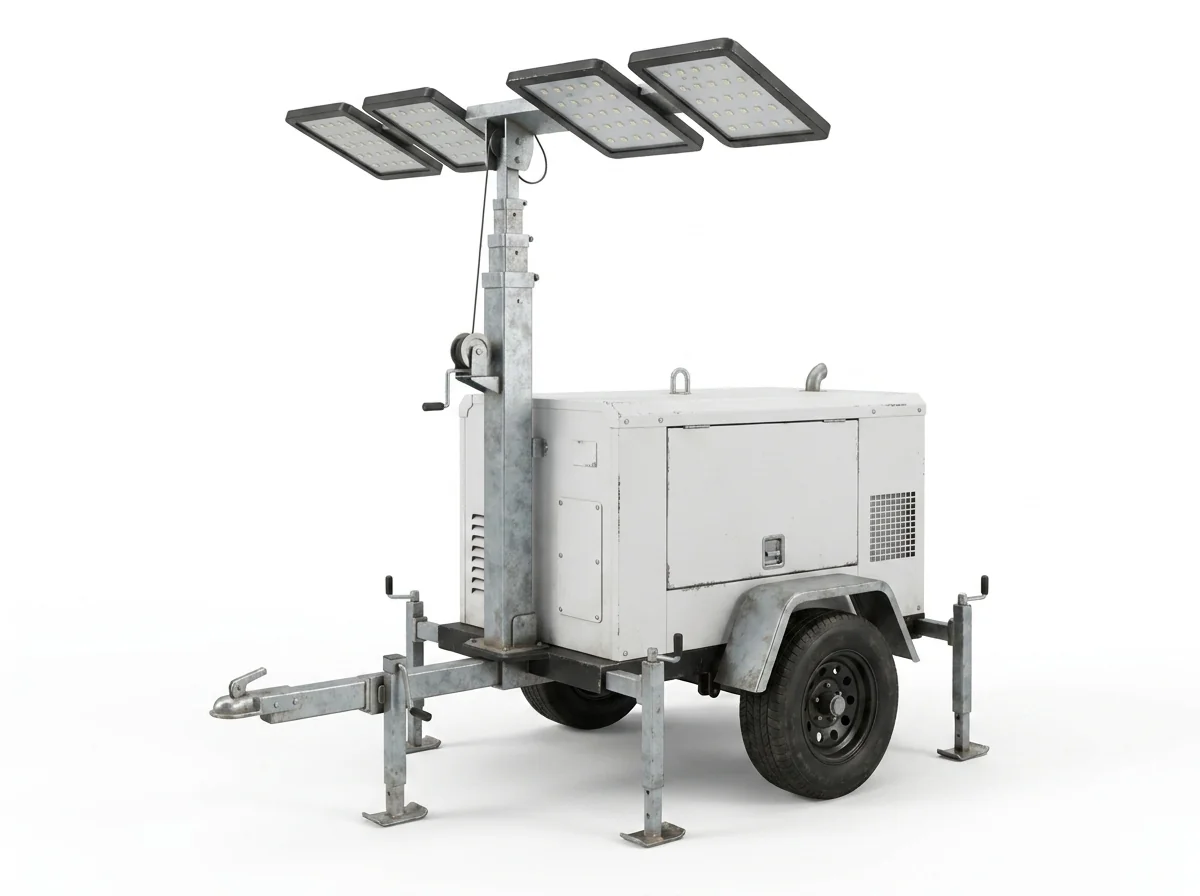
Amarillo’s open terrain sees frequent gusts. For light towers, mast height, outrigger footprint, and ground conditions affect stability limits. For generators, wind direction can influence exhaust dispersion and cooling air intake if the unit is parked in a recessed bay or near stacked materials. Actual operating limits, the chosen model’s instructions, and site procedures govern whether a mast can be raised or a unit can remain in place during high wind periods.
Surface and route considerations
- Flat, paved yards: favor wheel‑mounted units with tighter turning and low ground pressure.
- Caliche or uneven lots: plan for larger tires and a broader stance for light towers.
- Thresholds and ramps: confirm breakover angles at dock plates and curb cuts.
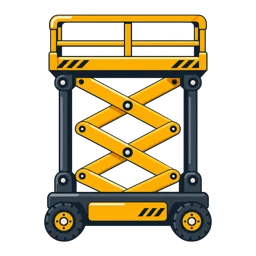
If the power or light supports elevated work, coordinate with aerial equipment positioning so units do not crowd lift approach paths. For indoor maintenance, consider electric scissor access at /electric-scissor-lift-rental/ and for outdoor slab or grade work see /rough-terrain-scissor-lift-rental/.
Runtime and load profile
Match apparent power to starting currents of compressors, welders, or multiple scissor lift chargers. Continuous loads differ from intermittent tool use. For lighting, note the target area size and whether light must backlight racking aisles versus open laydown, which changes the number of towers and mast angles.
Noise, air, and neighbors
Industrial sites tolerate more noise than healthcare or office buildouts. Exhaust direction, sound attenuation, and working hours shape placement. Semi‑enclosed docks can recirculate heat; spacing and airflow clearances affect performance.
When lifts and power share the site
- Boom work: keep swing radius and counterweight clearance away from cables and towers; see /boom-lift-rental/, /articulating-boom-lift-rental/, and /telescopic-boom-lift-rental/.
- Material staging: align with /telehandler-rental/ or /forklift-rental/ routing so refuel trucks and service vehicles can access generators without crossing active lift lanes.
Amarillo use cases
Local distribution buildings lean on quiet power during overnight rack changes, while outdoor infrastructure and service yards require light towers with a wide footprint due to gust exposure. On multi‑story renovation sites, staging areas are tight; note combined loads from saws, chargers, and temporary HVAC when sizing a generator.