What “rough terrain” does and does not answer
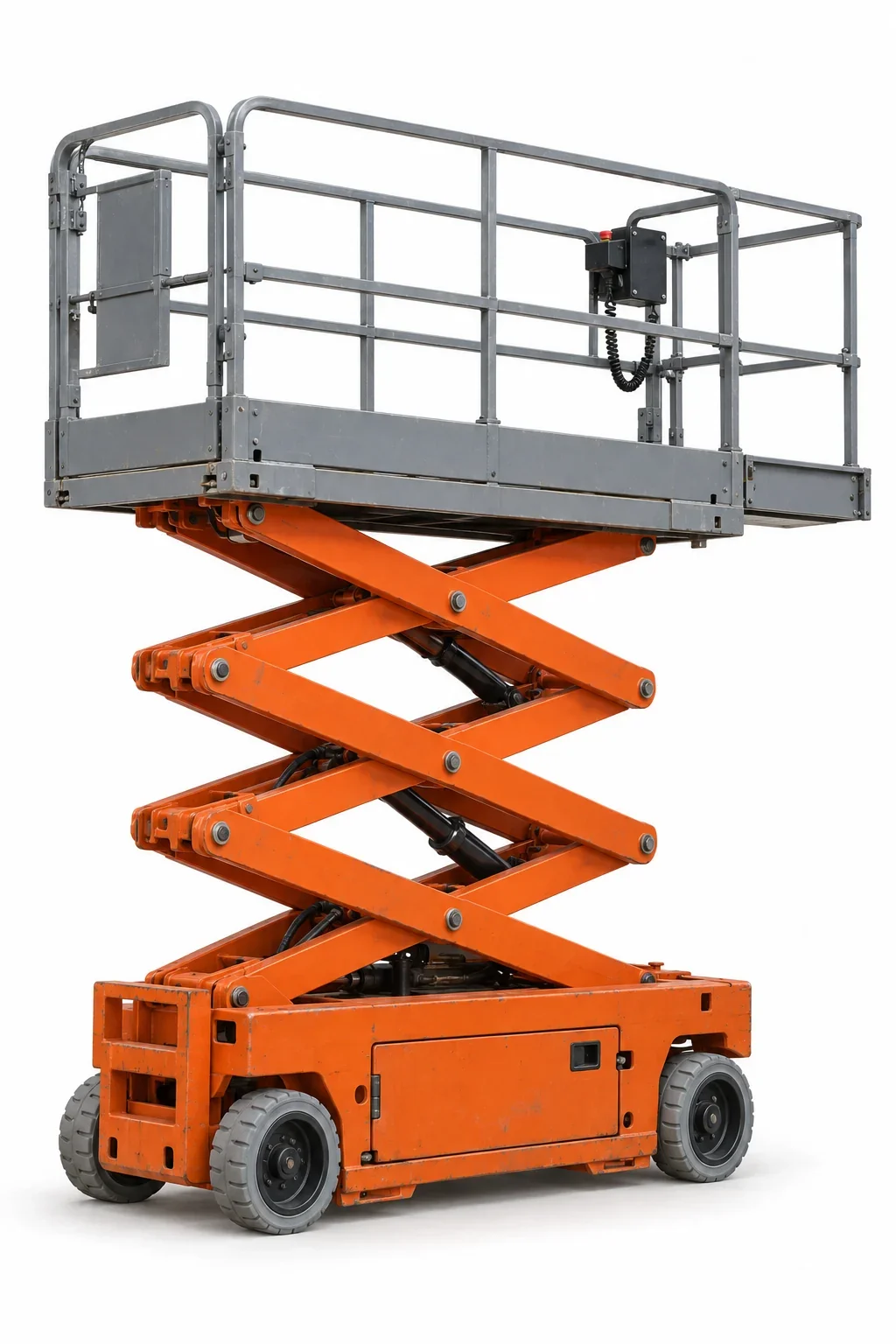
A rough-terrain scissor lift is a category used for many exterior access tasks where a compact slab machine would not fit the surface or route. It does not make soft ground, ruts, standing water, steep grades, loose fill, or unstable edges acceptable. The work area still needs to be assessed and prepared for the selected unit.
Plan the outdoor path, not just the final position
Follow the route from the delivery or entry point to the work area. Note gates, culverts, slopes, temporary mats, utility crossings, and the place where the machine will be positioned. A site can have a workable final pad and still have a route that changes the equipment discussion.
Amarillo exterior work: three common decision points
Building-envelope and structural work
When crews need a broad platform directly below cladding, electrical, mechanical, or structural work, a rough-terrain scissor lift may be worth comparing. Confirm whether the base can sit under the task and whether the surface is prepared for the selected unit.
Wind-exposed sites
The Texas Panhandle can see high-wind events. Review current conditions, site procedures, and the operating limits for the selected machine before planning elevated exterior work. If conditions change, the plan needs to change too.
Industrial yards and energy-adjacent work
Yards, laydown areas, and open facilities can involve mixed surfaces and long routes. Describe the full travel path, not just “dirt” or “gravel,” so the equipment conversation begins with real conditions.
Platform space is not a substitute for planning
Outdoor scissor platforms can provide useful space for a crew and tools. That does not remove the need to account for total platform load, materials, machine dimensions, and work-area clearance. The selected unit’s information controls those limits.
When a boom lift may be the better comparison
If the practical machine position cannot sit beneath the work, a scissor lift may be the wrong geometry. Compare a boom lift when the platform must travel up and out, or work around a building feature, equipment line, or setback.
Rough-terrain questions
Can it work on unpaved ground?
Possibly, but the actual ground condition, grade, compaction, weather, and selected unit need to be evaluated. “Unpaved” is not enough information for a safe choice.
Do outdoor lifts work in wind?
Use the operating limits and instructions for the selected machine, along with site conditions and local weather. Do not assume a machine is approved for elevated work simply because it is designed for outdoor terrain.
What should the site contact have ready?
Have the exact work location, a description of the route and ground, the task height, the platform load, access constraints, and any weather-sensitive part of the plan ready.