Define the control zones
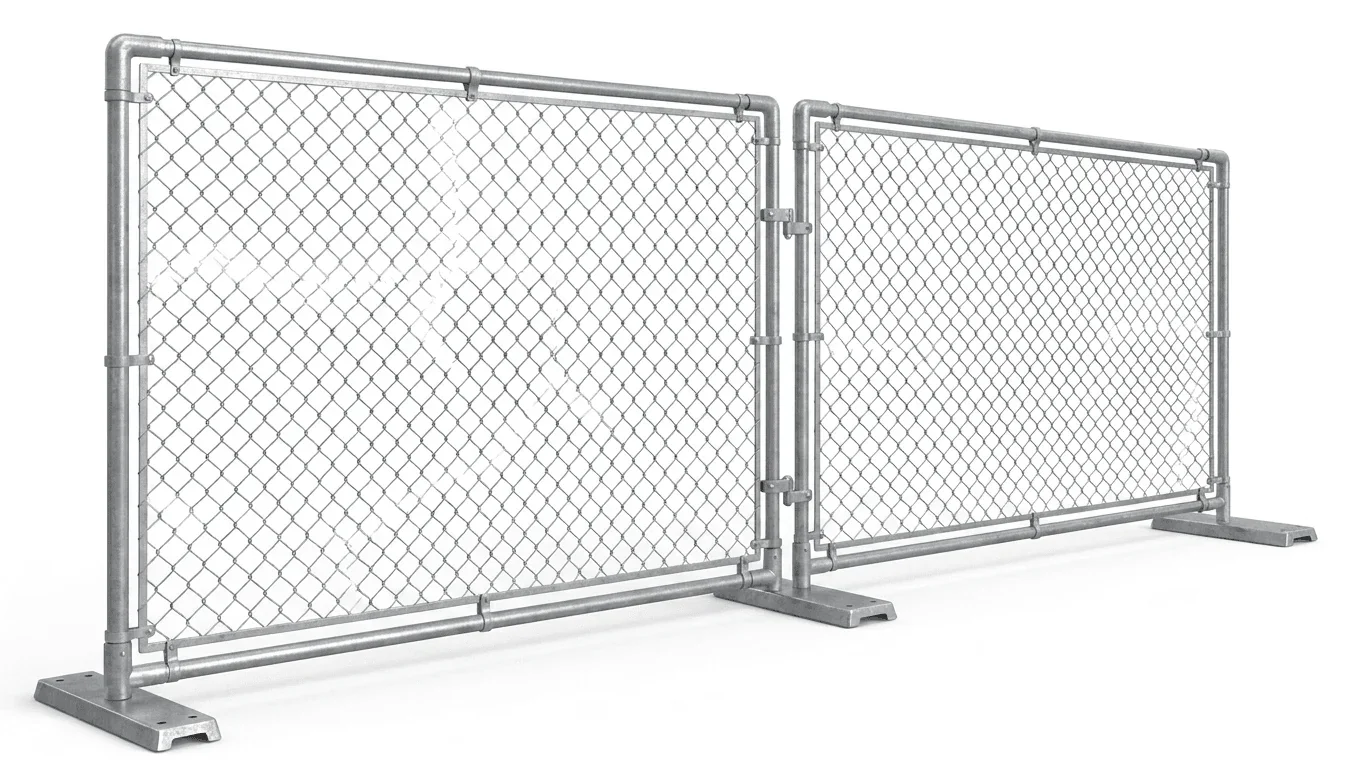
- Perimeter security: separate active work from public access or neighboring operations.
- Equipment buffer: create stand‑off around aerial lifts, cranes, and material movement.
- Pedestrian routing: set corridors that avoid blind corners and swing radiuses.
Map these zones on the actual surface type—pavement, compacted base, or landscaped soil—since footing and site-stability factors options vary.
Wind on the open plains
Frequent gusts influence panel height, mesh type, and site-stability factors. Taller, solid surfaces catch more wind; open mesh reduces load but may alter privacy goals. Actual limits on panel stability, site-stability factors, and tie‑ins are set by the selected system’s instructions and site procedures.
Surface and access
- Paved distribution yards: favor bases that sit flat without tripping hazards at dock transitions.
- Uneven or caliche surfaces: plan for adjustable footing and added site-stability factors.
- Snow or muddy periods: consider drainage paths so water does not undermine bases.
Where fencing intersects with lift activity, confirm clearances for /boom-lift-rental/ swing, /articulating-boom-lift-rental/ up‑and‑over paths, and /telescopic-boom-lift-rental/ outreach. For low‑profile indoor zoning, temporary barricades can define aisles for /electric-scissor-lift-rental/ units without blocking egress.
Gates, corners, and visibility
Gate width should match the widest equipment using the route, including /telehandler-rental/ and /forklift-rental/ traffic. Corners concentrate wind forces; layout with returns or site-stability factors that aligns with the system guidance. Lighting at gates and intersections may require portable towers; see /generators-light-towers-rental/ for planning.
Amarillo use cases
On institutional upgrades, fencing often divides occupied areas from renovation zones with controlled crossovers. At industrial sites, barricades flag lift work under overhead structures while fencing protects laydown from crosswinds and through‑traffic on broad pads.