Think beyond the pickup point
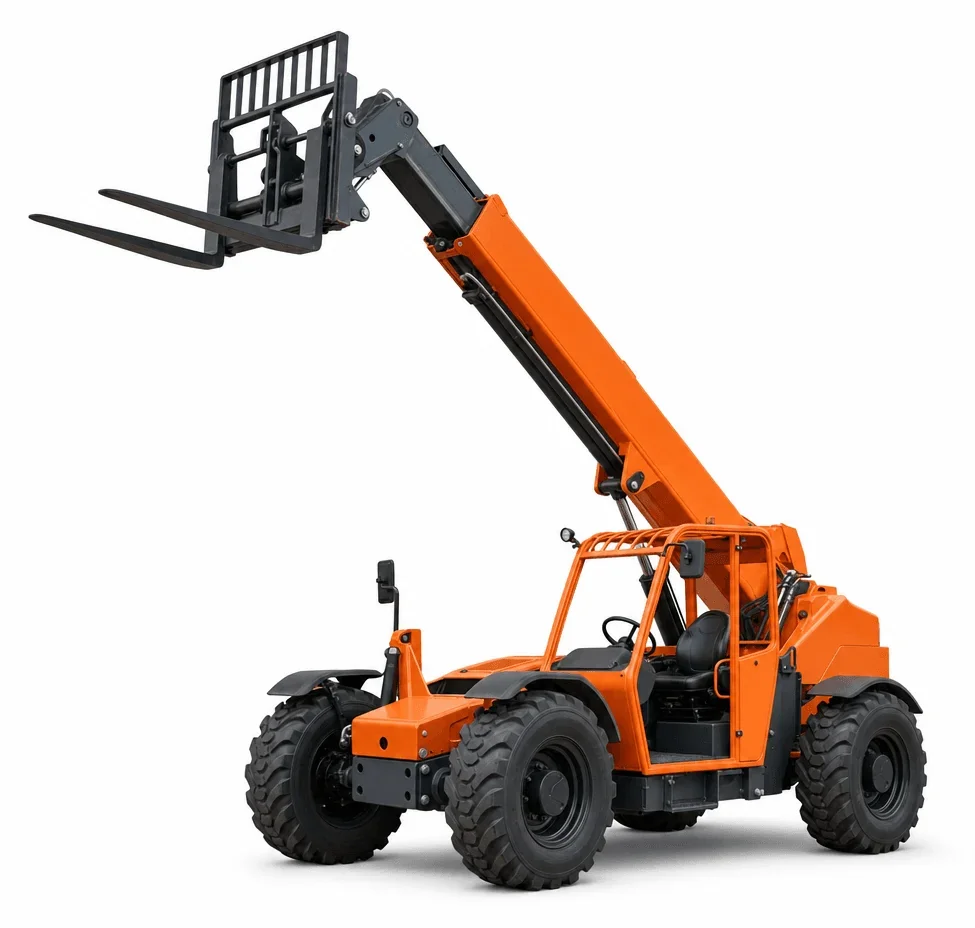
A telehandler combines forks with a telescoping boom. That makes it useful to compare when material must be lifted and placed forward as well as upward. The relevant question is not only how heavy the load is. It is where the load starts, where it must land, and how far the boom must extend to place it.
Amarillo material-handling situations to describe clearly
Building material placement
For a commercial or industrial project, material may need to move from a laydown area to an elevated deck, opening, or work zone. Describe the load, the placement height, the forward reach, and the ground between them.
Yard-to-work-area travel
An industrial or logistics site may have a long route from staging to the work area. Gates, traffic, slopes, surface changes, and turning space can matter as much as the final lift.
Mixed operations
A project may need pallets moved along a predictable hard route and other loads placed forward over open ground. That can be a reason to compare a forklift and a telehandler separately rather than assuming one category fits both tasks.
Load charts control the real decision
Telehandler capacity changes with boom extension, lift height, attachment, and the selected unit. Do not treat a nominal class name as the load capacity at every reach. Have the load weight, dimensions, attachment need, and placement point ready for the equipment conversation.
Ground still matters
A telehandler category does not remove the need to assess ground condition, grade, access, and the route. For Amarillo exterior work, current weather and wind also belong in the plan. Follow the selected unit’s information and site procedures.
Telehandler questions
Is a telehandler just a forklift with a longer mast?
No. A telehandler uses a telescoping boom to place loads forward and upward. That changes the placement capability and the way capacity must be evaluated.
What should I know about the load?
Know its weight, dimensions, where it starts, where it must be placed, the approximate height and forward reach, and whether forks or another attachment are needed.
Can it work on any outdoor surface?
No. The actual route, surface, grade, weather, and selected unit must be evaluated. Outdoor capability is not a blanket approval for every site condition.